}
Showing posts with label about Australia. Show all posts

July 11, 2026

The black-and-white terror

 To tourists and outsiders, Australia is a terrifying gauntlet of lethal wildlife. They think we live in constant dread of the inland taipan, the world’s most venomous snake. They picture us checking our shoes for redback spiders or scanning the surf for box jellyfish that can inflict agonizing, fatal stings.

But if you ask any actual Australian what strikes pure, primal terror into our hearts, we will give you a very different answer: the humble magpie.

On paper, the magpie sounds harmless. It’s a medium-sized bird with striking black-and-white feathers and a beautiful, warbling song. But come springtime—better known locally as "swooping season"—this sweet-looking bird reveals a deeply aggressive dark side.

The reason for the hostility is simple: pure parental protectiveness. During their brief nesting window, proud magpie parents view anything moving within a hundred-meter radius as an imminent threat to their unhatched chicks. To defend their territory, they launch high-speed, tactical aerial assaults.

They don't just fly near you; they dive-bomb. Cyclists and pedestrians alike are targeted from behind without warning. With terrifying precision, the birds clip ears, peck at eyes, and slash at scalps, frequently drawing blood and leaving victims with nasty head wounds.

This annual reign of terror has forced Australians to develop some truly absurd survival strategies. Walk down any street in September and you’ll see commuters wearing ice-cream tubs on their heads or cyclists riding with dozens of plastic zip-ties poking out of their helmets like high-visibility mohawks. We look absolutely ridiculous, but desperation breeds innovation.

So let the tourists worry about the snakes in the bush and the sharks in the deep blue sea. True Australians know that the real danger doesn’t crawl, swim, or hide in the shadows—it waits patiently in a suburban gum tree, eyes locked onto your scalp, just waiting for you to walk past.


January 08, 2011

Amazing facts about Australian Animals

I wrote this for a class based on Google found information.  Some interesting facts about our local critters.

  • Marsupials like koalas and kangaroos can be found nowhere else in the world. Marsupials are animals that bring up their babies in a pouch.
  • It is difficult to be a wild animal in Australia. It is very dry and food can be hard to find. This means animals need to use less energy.
  • Marsupials use so little energy that they need to eat one-fifth less food than mammals of the same size.
  • There are over 60 different species (types) of kangaroos.
  • Kangaroos hop because it is takes much less energy to move around.
  • A million years ago, there was a type of kangaroo that was over three metres tall.
  • Koalas eat gum leaves which are so poisonous that they use 20% of their energy just digesting their food. They make up for this by having tiny brains (brains use up a lot of energy). They are very stupid! But nothing hunts them so it is OK.
  • Koalas are not always cute. They can make an extremely loud growling noise.
  • Australia has two mammals that can lay eggs. They are the platypus and echidna. They are the only animals in the world to lay eggs.
  • Platypuses can eat their own body weight in food in a 24 hour period!
  • The Emu is the world's third largest bird. The nest of an Emu can be up to 1.5 metres wide!
  • The Tasmanian Devil has very strong jaws (nearly as strong as a crocodile). This helps them to eat bones.
  • There are more than 150 million sheep in Australia and only 20 million people. That's 8 sheep for every person.
  • Young Kookaburras (a type of bird) often stay with their parents to help them bring up new chicks because food is difficult to find.
  • It is thought that Dingos were the first domesticated dogs and the "father" of all other domestic dog breeds.
  • Australia has the longest fence. It's known as the Dingo Fence and runs through central Queensland and is designed to keep sheep safe from our native dog the Dingo... the fence is about 6 feet high and stretches over 5500 kilometers.

Dangerous Animals
  • Australia is home to 10 of the world's 15 most poisonous snakes. Of Australia's 155 species of land snakes, 93 are poisonous.
  • The Australian Taipan is the most poisonous snake in the world.
  • The Stone Fish that lives in the Great Barrier reef has strong poison that can kill a person in less than two hours. People sometimes step on them. The only way to stop the poison is to put your foot in boiling water. Ouch!
  • The box jellyfish kills more people in Australian each year than Snakes, Sharks and Salt Water Crocodiles.
  • The Irukandji jellyfish is only 2.5 centimetres in diameter, but can cause death to humans within days.
  • There are 1500 species of Australian spiders.
  • The saltwater crocodile is the world's largest reptile - males can reach a staggering 6 metres long.
  • The temperature of the saltwater crocodile's egg will decide the sex of the baby crocodile.
  • The saltwater crocodile has only two muscles to open its mouth but 40 to close it! 


November 02, 2010

Fascinating facts about the Melbourne Cup


This is part of a piece I wrote for my students about The Melbourne Cup to get them in the mood for the race.  We stopped our lesson early and all went to the local pub to watch the race together.  Of course, needless to say, we all had a bit of a punt (I organised the class "sweepstakes") but my horse came second last.  Oh well, gambling and fishing just don't seem to be my thing...

  • The Melbourne Cup is Australia's most famous horse race. The race always happens on the first Tuesday of November and it starts at 3 p.m. This is the 150th year that the Melbourne Cup will be run. So, you are here in Australia at a historic moment!
  • The Melbourne Cup takes place in (yes, you guessed it!) Melbourne at the Flemington Racecourse. Horses have to be three years or older to take part.
  • The Melbourne Cup is known as "The race that stops a nation." That's because just about every person in Australia stops doing whatever they are doing to drink beer or champagne and listen to or watch the race.
  • A recent survey calculated that the Melbourne Cup costs the Australian economy over $ 1 billion in lost work. That's because no-one does much work on the afternoon of the race (not even English students) and it’s a public holiday in Victoria. But who cares! It's lots of fun and an excuse for Australians everywhere to have a party.
  • Australians love to gamble on any day and especially on the day of the Melbourne Cup. The "sweep" (sweepstakes) is particularly popular where each person puts in some money and they are given a randomly chosen horse. The person with the winning horse wins all the money. Then they get to buy everyone drinks!
  • The Melbourne Cup is not really about horse racing at all! It's about having fun and drinking champagne and eating canapés and looking beautiful in the latest fashions. It's one big fashion parade and it's all about being noticed. And often the most popular way to do that is to wear a huge, exotic looking hat.
  • Sometimes the fashions at the Melbourne Cup influence what people wear all over Australia and even in other parts of the world. In 1965, everyone remembers when Jean Shrimpton, a model from England, wore a miniskirt. The skirt went just above her knees (shocking in those days!) and caused a worldwide sensation. Soon everyone was wearing them.
  • The first Melbourne Cup was run in 1861 and was won by a horse called "Archer." Archer lived in Nowra in New South Wales so he had to walk 800 km's just to get to the start of the race! Seventeen horses took part and the prize was a gold watch and £170 ($ 300).
  • In today's race, 24 horses will take part and the prize money is $ 7.7 million and $ 4.5 million of that goes to the winning horse. Even if you come 10th, you get $ 160,000. Over 100,000 people will attend the race.
  • The Melbourne Cup is one of the most difficult and challenging races in the world. The race is run over 3,200 metres and it is a handicapped race. This means that the better the horse is, the more weight it has to carry in the race. In the 1890's there was a particularly strong horse called Carbine who won many races. He had to carry a weight of over 66 kg in the Melbourne Cup (that doesn't even include the jockey) and yet he still won the race!
  • Only four horses have won the Melbourne Cup twice and only one horse (Makybe Diva in 2003) has won it three times. The distance and the handicap make it very difficult to predict who will win the Melbourne Cup. Any horse can win. Who knows, maybe it will be your horse than wins the race today. Good luck! And if you win, remember to buy your teacher a beer.

Jean Shrimpton in her “shocking” miniskirt that caused a worldwide sensation.  Get a life, people!


.

December 18, 2007

14 Things we love about Australia and 7 things we love to hate


OK, so we have been living here for 18 months now and we are absolutely thrilled we moved here. Australia is a wonderful country to live in with so much going for it. Here is a list of things we love about it. And, for objectivity sake, a couple of things we love to hate. Hopefully it will act as an incentive for the rest of you to emigrate here as we miss you all!

Things we love

1. The beaches
Miles and miles of gorgeous golden sand, warm water, crashing waves - and plenty of different beaches to choose from. Some of our favourite beaches include Manly, Dee Why, Bondi (mostly for the beautiful people), the two mile beach in Port Douglas, Palm Beach (where they film Home and Away) and the mangrove fringed beaches of Cape Tribulation.

2. The Australians themselves
Friendly, laid back, full of fun - I cannot extol the personal qualities of the "Aussies" enough. We have felt nothing but welcomed by the locals since we arrived. I was terrified that we'd be treated as "Not another bloody South African clogging up our country" but there has not been even a hint of that. The Aussies have a great sense of humour, very similar to our own. And who couldn't love a nation of people who's national saying is "no worries mate." We have made some wonderful Australian friends already like Doug and Claudia who I firmly believe will be life long friends.

3. The migratory pull of Australia
Being the magnificent country it is, its been pretty easy (through our avid recruitment campaign) to attract some of our friends and family to share our lives downunder. Kerry, Ally's sister, has been here now for close to a year and hopefully she will stay. Brendan and Eva have returned here from Cape Town. Roger and Lucy have moved here from South Africa (now we just need to get them to move to Sydney from Melbourne). Andreas and his wife are emigrating here from the UK in March. Plus, thanks to the pull of Sydney, we have been graced with lots of visitors including Dorothy, Hubert and Martin. Mum and Mike, Colleen and Steve, Gabrielle and Hamish are all visiting early next year.

4. The local wildlife
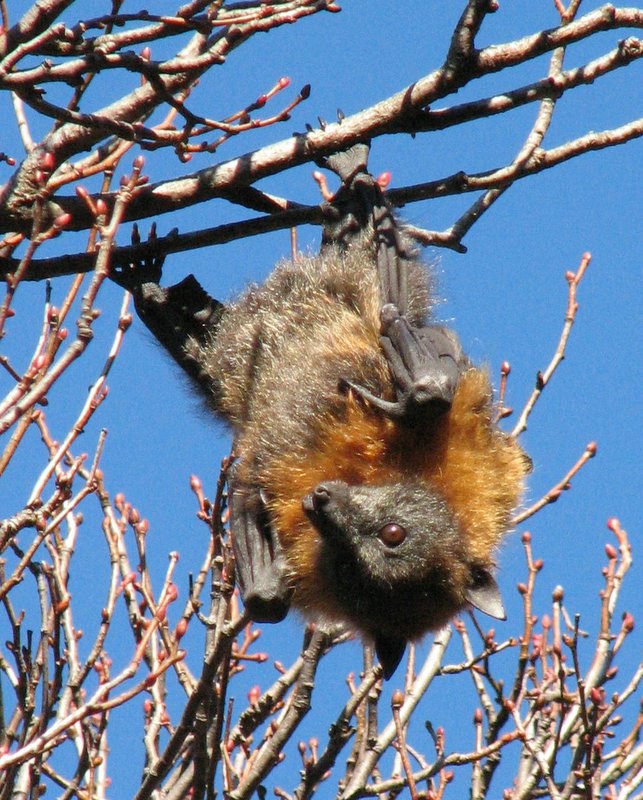
There are amazing (and exceedingly strange) creatures to enjoy here including hopping kangaroos, cuddly koalas, chunky wombats and mischievous possums. Not to mention enormous fox-like bats and the extraordinary warm blooded duck billed platypus that lays eggs and has a bill like a duck. The birds are also great, including Aussie icons like the laughing Kookaburra, the enormous flightless Cassowary and the Splendid Lyrebird with its amazing mimicries. There are still over 550 birds that I have yet to see and I look forward to hunting them down during my life here.

5. The sunny weather
Australia comes with tons of sunshine and warm weather. The weather is just right for picnicing, lazing on the beach, hiking and generally enjoying the outdoors. I find sunshine makes such a difference to how I am feeling and am sure this one of the key causes of the sunny disposition of most Aussies. Even the winter here provides some gorgeous blue skies and warm weather.

6. Nature reserves and beautiful scenery
Australia seems to have more nature reserves than just about any other country I have visited. Its obsession with looking after what's left of its natural areas is admirable and as a result, there are a plethora of parks and reserves to go hiking in. This extends from reserves on the outskirts of the city like Ku-ring-gai Chase National Park to the mighty wetlands of Kakadu in the North (which I cannot wait to visit.)

We have loved visiting the parks in and around Sydney and our favourite so far is the Royal National Park which is the second oldest reserve in the world and contains forests and beaches and beautiful lagoons. Plus it's so big, you could get lost in it for weeks. And its only 30 minutes drive from Sydney. The Hawkesbury Reserve is also beautiful; a vast network of rivers that we explored in January this year. The reserves of the Blue Mountains also provide spectacular scenery, only a 90 minute drive from Sydney.

7. Place names
Would you like to live in Woolloomooloo? Or pehaps Turramurra or Barooga? Or Dunnydoo, Innaloo or "Come By Chance"? If that's not exciting enough, how about Burrumbuttock, Rooty Hill, Indented Head, Chinaman's Knob or Wet Beaver Creek? Yes, many towns in Australia have wonderfully strange names. Many of the stranger names have Aboriginal roots which adds to the allure and historic heritage. Being able to pronounce some of these names correctly definitely sorts the "fair dinkum" Aussies from the rest of us.

8. Sydney itself
Ah Sydney, what a glorious city! Graced with the likes of the Sydney Harbour and its distinctive bridge and the glorious Opera House (breathtaking beautiful at night). Not to mention a bevvy of great restaurants and hot night spots - and the amazing beaches of Bondi, Manly, Dee Why and lots of others. As described above, it is also interspersed with beautiful national parks and reserves that extend around the city like giant green lungs. The city is incredibly cosmopolitan too with a wonderful mix of Asian and European cultures that bring with it great benefits like authentic Yum Chow for breakfast and sublime sushi for lunch.

9. Plenty of job opportunities
Australia is booming at the moment economically thanks in no small part to rampant China. The extraordinary number of jobs available combined with a general skills shortage makes it very much an employee's market. Do a search at Recruit.net, for example, and you'll find over 6500 marketing jobs available. When I first looked for a job, I had 3 simultaneous job offers to decide between after a very short time. Not suprising that Australia has an unemployment rate of just 3%. All the big companies are literally crying out for people. A great position to be in if you are a job searcher.

10. The facilities
The facilities here are excellent and everything works like clock work. The public transport is wonderful and you get amazing personal touches like the bus drivers decorating their buses with tinsel and other Xmas decorations. Being able to commute to work by ferry and view the Sydney skyline every morning before work is also a very special thing. The big parks have inbuilt barbecues that you can use for free. And all the public loos are in excellent working order and you never need to worry that their won't be loo paper. Ah, you can't ask for more than that!

11. Fair Dinkum Aussie Sayings
You cannot help but love a nation that uses expressions like "arse over tit" (to fall over), "mad as a cut snake" (very angry), "sticky beak" (a nosey person), "budge smuggler" (speedo costume) , bush telly (camp fire), "as dry as a nun's nasty" (parched), "rip snorter" (fantastic), "root" (to shag), and "tall poppy" (a successful person). Very eandearing! For a full account of Aussie terms, see here.

12. The sense of space
Australia is an amazingly huge country. Not suprisingly, it's the largest island on the planet and the only island that is a continent. We have not visited the vast outback yet, but I hear its extraordinarily stunning with its enormous wide open spaces and parched red earth. This is where you will find Uluru, the world's largest rock. Huge it is; amazingly it extends 6 kilometers underground. Nothing is small about Australia.

13. Amazing seafood
The sea food here is absolutely wonderful. The Sydney Fish Market, just 10 minutes from where we live, offers gigantic prawns, mud crabs, lobsters and scollops - all at really reasonable prices. Once of our favourite rituals is to buy a kilogram of succulent tiger prawns and eat them cold with sweet chile sauce. Yummy beyond belief!

14. Amazing Fireworks
The Aussies love fireworks, particularly over their bridges. Come New Year's Eve and they unleash millions of dollars of fire rockets. The results are awfully impressive. We get to enjoy fireworks over the Opera House just about every second Saturday. And we love it.


Things we love to hate

OK, so its not all a bed of roses! There are some things that we are not too fond of...

1. Huge parking fines for trivial reasons
We have had to pay over $600 in parking fines in just 18 months. $150 for a single parking infringement is bloody steep in anyone's book. And the fact it's generally incurred for trivial things is salt in the wound.

For example, in Byron Bay, we failed to park at 135 degrees to the pavement as was the requirement (advertised on a tiny sign that was hardly visible). When we sent in a complaint to the authorities with photographic evidence of this, we got no joy back and had to pay.

The "no parking" sign outside Brendan and Eva's home in Mosman was even more obscure - tiny in size and hidden on a lamp post. When we failed to see it and parked directly along side their house, we got another $150 fine. Enough to cause the blood to boil and spoil the weekend. Eva and Brendan fell prey to exactly the same thing a few weeks prior to us.

The bottom line: when you park anywhere in Australia, always spend at least 5 minutes probing around for obscure parking signs. Becasue if you fail to follow them, know that there is a fanatical ticket officer just waiting to pounce.

2. No right hand turns
In just about every other country I have driven in, there is absolutely no issue with right hand turns. Simply indicate right and when the traffic thins out or the traffic light turns red, turn right across the traffic. Simple, right? But not here...

The Australian powers that be have an absolute phobia about anyone turning right across traffic. So everywhere that you could possible need to do such a manouvre, they have a big "no right hand turn" sign. Generally it means you need to do a doubly dangerous U-Turn so you can change the right turn into a left turn. Or drive for bloody ages so you can turn left into the next available street and then come all the way back. Enfuriating indeed!

3. Cheesey advertising and too much of it
Much of the advertising on the TV is highly localised. Lets say you have a store in Burrumbuttock and want to advertise yourself. With the technology at hand, you can purchase a TV ad spot at a low rate that will just show in the Burrumbuttock region. And because you don't have muich money, you can cobble together a very cheap advert. The bottom line: many of the TV ads here are highly irritating cheapies with no redeeming qualities at all.

To add insult to injury, the Australias interupt programs every 10 minutes. And each ad break can last at least 5 minutes. That means that a 90 minute movie lasts over 140 minutes. So irritating does it become that we have almost given up on watching TV altogether which is probably not such a bad thing.

Radio is even worse with tons of irritating ads. Even the traffic reporter does an ad recital after his regular traffic report. And the radio DJ's are paid to read out ads during their slot to make it sound conversational and not an ad. But an ad it is. So now we listen to CD's in the car, not the radio.

4. Politics
Australian politicians love nothing more than to slag each other off in the most vicious of ways. On TV and through political advertising, they veritably tear each other apart. It really is no holds barred. An Australian politician is far more likely to spend his 5 minutes in the limelight telling the world why his opponent is an absolute tosser than 5 minutes telling you what his policies are and why they are good. It's all really negative. Also, the government spends gazillions of tax payers' money each year running ads extolling their social programs. Which of course, adds to the advertising issue discussed above.

5. Dancing with the stars host
OK, so this is a trivial one but still... One of the TV shows that we kind of like is "Dancing with the Stars." We would probably watch it regularly if it weren't for its highly irritating host, Daryl Somers. For god sake, please put him out to pasture!

6. Highly poisonous creatures
Five of Australia's creatures - the funnel web spider, box jellyfish, blue ringed octopus, paralysis tick and stone fish are the most lethal of their type in the world. Australia is home to 10 of the world's 15 most venomous snakes. In fact, of Australia's 155 species of land snakes, 93 are venomous. The Australian Taipan is the most poisonous snake in the world with a lunge so swift and a venom so potent that your last mortal utterance is likely to be: "I say, is that a sn-" The bottom line? You need to be seriusly watch your back in Australia. The creepy crawlies can kill you!

7. Buying a house
Finding the right home is made rather difficult. Very few of the houses advertised actually have prices shown. So you never know if a house you are going to see is actually in your budget. You need to get this information from the estate agent when you see the house. How silly is that! Also, houses are generally only open for a 45 minute window on the weekends. So if you want to see 5 houses, you need to plan your trip like a military operation with 10 minutes in each place with lightning drives between houses. When it comes to looking at houses, I really miss the South African way - except for the exhorbitant estate agent fees.

Conclusion
I think you'll agree, the pros significantly outnumber the cons. If you'd like advice on how to emigrate to this wonderful country, just drop us a line :) If you are living in Australia and feel I have forgotten something in my lists, please leave a comment!

July 29, 2006

Fascinating facts about Australia

We have been re-reading Bill Bryson's fantastic (and hilarious) travel book about Australia called "Down Under" as well as "The Lonely Planet Australia."  


Here are some of the fascinating facts we have gleaned:


Geography

  • Australia is the only island that is also a continent and the only continent that is also a country.
  • Australia's population is small by world standards - only about 20 million. China grows by a larger amount every year.

History

  • It is conjectured that Aborigines arrived in Australia about 46,000 years ago, at a time of lower sea levels, during the ice age. They came via South East Asia and had to cross water passages at least 70 km's wide
  • The first colonists from Europe nearly starved to death waiting for shipped in supplies rather than finding out what the indigenous population was eating.
  • Several of the early European explorers were so convinced that they would encounter mighty river systems or even an inland sea that they took boats with them into the interior. Thomas Mitchell, who explored vast tracks of New South Whales and Victoria in the 1830's, dragged two wooden skiffs over 3000 miles of arid scrub without once getting them wet, but refused to the last to give them up.
  • The gold rush of the 1850's marked the end of Australia as a penal colony and its beginning as a nation. In less than a decade, the country took in 600,000 new faces, more than doubling its population.

Landmarks

  • When Sydney's city burghers decided to put a bridge across the harbour, they determinded to make it the longest bridge in the world. Stretching 1650 feet, it took almost 10 years to build. Just before it was completed in 1932, the Bayonne Bridge in New York quietly opened and was found to be 25 inches longer.

Dangerous creatures

  • Five of Australia's creatures - the funnel web spider, box jellyfish, blue ringed octopus, paralysis tick and stone fish are the most lethal of their type in the world.
  • Australia is home to 10 of the world's 15 most venomous snakes.
  • Of Australia's 155 species of land snakes, 93 are venomous.
  • The Australian Taipan is the most poisonous snake in the world with a lunge so swift and a venom so potent that your last mortal utterance is likely to be: "I say, is that a sn-"

Geology

  • For the last 90 million years, Australia has been geologically comatose. It was too flat, warm and dry to attract glaciers, its crust to ancient and thick to be punctuated by volcanoes or folded into mountains. Under such conditons, no new soil is created and the old soil is leached of its goodness, making much of Australia's soil infertile.
  • Ayer's Rock (Uluru) is the eroded stump of a mountain that 350 million years ago was the height of the Andes.

Amazing creatures

  • The largest roo that ever existed was the giant short-faced kangaroo, which lived during the Pleistocene era. It grew to heights of up to 3 m!
  • The saltwater crocodile is the world's largest reptile - males can reach a staggering 6 m long
  • One of the most common marsupials in Australia are nocturnal rat like creatures called antechinus. They live for only 11 months, the first 10 of which are spent eating and growing. Then their minds suddenly become obsessed with sex, so much so that they forget to eat and sleep. Instead, they gather in groups and try to woo passing females with serenading squeeks. By the end of August, just two weeks after reaching puberty - every male is dead, exhausted by sex, and by carrying around swollen testes.
  • Marsupials are so energy efficient that they need to eat one-fifth less food than equivilent-sized placental mammals.
  • Kangaroos hop because it is the most energy efficient way of getting around at medium speeds. The energy of the bounce is stored in the leg tendons, much like a pogo stick.
  • Koalas eat gum leaves which are so toxic that they use 20% of their energy just detoxifying their food. They make up for this by having tiny brains (our human brains take up 20% of our energy.) Living in tree tops with so few predators means koalas can get by with few wits at all.
  • So challenging are conditions in Australia that several of its birds (kookaburras, magpies and blue wrens toname a few) have developed a breeding system called "helpers at the nest" Young adults stay with their parents to help bring up new chicks.
  • The dingo is thought to have been the world's first domesticated dog and the ancestor of all domestic dog breeds.
Clicky