}
Showing posts with label >universe. Show all posts

August 01, 2026

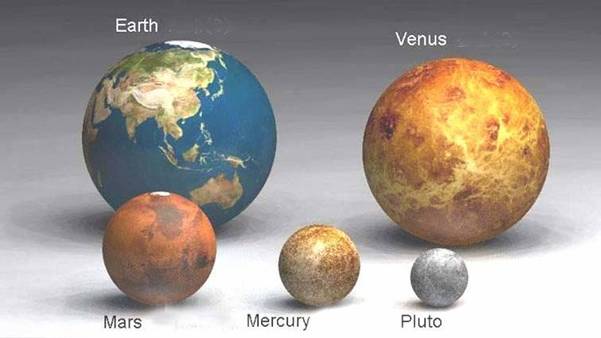
The wondrous planets of our solar system


Edit


Ode to the planets

I was fascinated by the planets when I was a child. Their names alone seemed magical: Mercury, Venus, Mars, Jupiter, Saturn, Uranus, Neptune and distant Pluto, which we then knew as the ninth planet. I loved seeing pictures of them in books and imagining these extraordinary worlds turning silently in the darkness. They made the universe feel immense, mysterious and alive with possibility.

Each planet seemed to possess its own personality. There was fiery Venus hidden beneath poisonous clouds; rust-red Mars with its deserts, volcanoes and tantalising possibility of life; enormous Jupiter with its swirling storms; and magnificent Saturn, encircled by rings so beautiful they hardly seemed real. Beyond them were the cold, mysterious worlds of Uranus and Neptune—remote blue giants drifting near the edge of everything I could imagine.

What captivated me was the realisation that these were not simply lights in the night sky. They were entire worlds. Each had its own landscapes, weather, seasons, moons and mysteries. Some possessed mountains higher than any on Earth, storms larger than our planet and oceans concealed beneath frozen surfaces. I could stand in my garden, look upwards and know that all of them were truly out there, travelling with us around the Sun.

The planets opened my childhood imagination to the sheer scale of existence. I imagined what it might be like to stand beneath another sky, to watch two moons rise over an alien landscape or to float among the rings of Saturn. Long before spacecraft sent back their astonishing photographs, these worlds had already become destinations within my mind—places of adventure, beauty and endless discovery.

And among them is Earth: the planet that can seem ordinary only because it is our home. Seen within the family of planets, its wonder becomes even clearer—a blue and white jewel with oceans, forests, clouds, birds, animals and billions of human lives. As far as we presently know, it is the only world where the universe has awakened into life and become able to look back at itself.

My childhood fascination with the planets has never really left me. We now know far more about them than I could have imagined then, yet every discovery seems to deepen rather than diminish their mystery. They remind me that our world is part of something far greater: a magnificent procession of planets and moons, each following its ancient path around the Sun, together crossing the darkness of space.


Fascinating facts about the planets

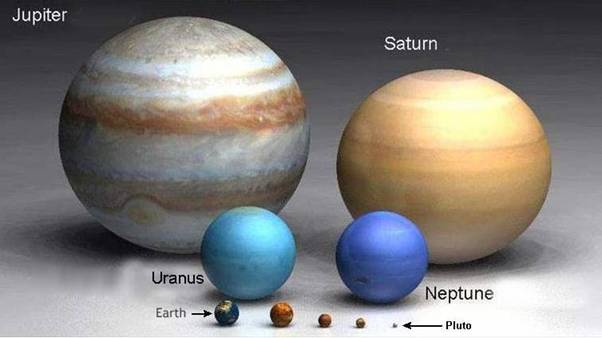
  • Our solar system contains eight wonderfully different planets. The four inner planets—Mercury, Venus, Earth and Mars—are small, rocky worlds. Jupiter and Saturn are gas giants, while Uranus and Neptune are ice giants without solid surfaces upon which anyone could stand.
  • Mercury races around the Sun faster than any other planet. It completes an entire orbit in only 88 Earth days, meaning that a year on Mercury lasts less than three of our months.
  • Mercury experiences an extraordinary range of temperatures. Daytime temperatures can reach approximately 430°C, but without a substantial atmosphere to retain that warmth, nighttime temperatures can plunge to around −180°C.
  • A day on Venus is longer than a year on Venus. It takes 243 Earth days to rotate once, but only 225 Earth days to travel around the Sun. Venus also spins in the opposite direction from most planets, so the Sun would rise in the west and set in the east.
  • Venus is hotter than Mercury, even though Mercury is closer to the Sun. Its thick atmosphere traps heat in a runaway greenhouse effect, producing an average surface temperature of roughly 467°C—hot enough to melt lead. Its atmospheric pressure is around 93 times greater than Earth’s.
  • Earth remains the most wondrous planet we know. It is the only known world with abundant liquid water on its surface and the only place in the universe where we have confirmed the existence of life. Its oceans cover approximately 71% of its surface.
  • Mars possesses the largest volcano in the solar system. Olympus Mons rises more than 40 kilometres from base to summit and covers an area about the size of Arizona. Mars also has a canyon system more than ten times longer and wider than Earth’s Grand Canyon.
  • Sunsets on Mars are blue. During the Martian day, dust gives the sky a rusty reddish colour, but near sunset the fine particles allow blue light to remain concentrated around the Sun—the reverse of the familiar red and gold sunsets of Earth.
  • Jupiter is so enormous that around 1,000 Earths could fit inside it. It is more than twice as massive as all the other planets in the solar system combined. Yet it is composed mainly of hydrogen and helium and has no true solid surface.
  • The largest planet also has the shortest day. Despite its colossal size, Jupiter spins around once in only about 9.9 hours. This rapid rotation causes the planet to bulge around its equator and helps create its powerful, swirling weather systems.
  • All four giant planets possess rings. Saturn’s are the most spectacular, but Jupiter, Uranus and Neptune also have ring systems—fainter and more difficult to see, yet beautiful in their own right.
  • Saturn’s rings are astonishingly vast and incredibly thin. The main ring system stretches as far as 282,000 kilometres from the planet but is typically only around ten metres thick. The rings consist of billions of fragments of ice and rock, ranging from dust-sized grains to pieces as large as mountains.
  • Saturn is the only planet less dense than water. If a bathtub large enough could somehow be constructed, this enormous planet would float—although finding a bath more than 120,000 kilometres wide could present a problem.
  • Uranus travels around the Sun lying almost completely on its side. Its axis is tilted by nearly 98 degrees, possibly because an Earth-sized object struck it long ago. This produces the most extreme seasons of any planet, with parts of Uranus experiencing approximately 21 years of continuous darkness. Its moons are equally enchanting: they are named after characters from Shakespeare and Alexander Pope.
  • Neptune was discovered through mathematics before it was seen through a telescope. Its existence was predicted from the strange behaviour of Uranus’s orbit. Neptune has the fastest winds measured on any planet—reaching about 2,000 kilometres per hour—and takes roughly 165 Earth years to orbit the Sun. It completed its first full orbit since its discovery only in 2011.

August 01, 2026

The wondrous sun


Ode to the sun


Before almost everything else I have ever loved, there was the Sun. Before the first human opened their eyes, before the first bird lifted into the sky or the first flower turned towards the light, it was already burning—pouring its warmth into the darkness and awakening a small blue world. Every sunrise is therefore both utterly ordinary and quietly miraculous: the return of the light, the unveiling of colour and the beginning of another day.

As a photographer, I am mesmerised by light—by the way it transforms an ordinary landscape, illuminates a face or turns clouds into fire. For me, there is almost nothing more wondrous than a sunrise or sunset. Each is fleeting and unrepeatable, the sky becoming a vast canvas of gold, crimson, pink and violet before changing again moments later. No matter how many I witness or photograph, I never tire of them. They remind me to stop, look and be fully present for the brief beauty unfolding before me.

And there are few sensations more wonderful than turning my face towards the Sun and feeling its warmth upon my skin. It is such a simple pleasure, yet it feels almost like a blessing—a direct physical connection with the star that makes our existence possible. Its light has travelled across the emptiness of space to reach this particular place, this particular moment, and me.

The Sun is the great giver. Its energy moves through forests and oceans, through clouds and rivers, through every leaf that unfolds and every creature that breathes. It warms our world, guides the seasons and paints everything with light and shadow. The food we eat, the winds that cross the planet and the countless forms of life surrounding us all trace their story back to this magnificent star. We do not merely live beneath the Sun; we live because of it.

It has also illuminated the entire human story. The Sun shone upon our earliest ancestors as they stepped onto open plains, upon the first cities rising beside rivers, and upon every journey, discovery, celebration and sorrow that followed. Civilisations worshipped it, poets praised it and artists tried to capture its radiance. It has been a god, a clock, a compass, a symbol of hope and rebirth—and the silent witness to every life ever lived.

Yet for all its familiarity, the Sun remains almost beyond comprehension: a colossal furnace suspended in the blackness of space, transforming matter into light and sending that light across the void to reach us. We may understand something of the science, but wonder begins where mere understanding ends. To stand in the warmth of sunlight is to feel my connection to something immense—to remember that I am part of a living world, circling a star, held within a universe more astonishing than I can ever fully grasp.

So here is my ode to the Sun: our nearest star, our faithful companion and the blazing heart of our little corner of the cosmos. Each morning it reminds me that darkness is never the whole story, that life depends upon gifts we did nothing to earn, and that even the most familiar things become wondrous when we truly stop and look.


Fascinating facts about the sun

  • The Sun is a star. It looks unlike the stars of the night sky only because it is so much closer to us. In cosmic terms, it is a fairly ordinary, medium-sized star—but to Earth, it is everything.
  • It is approximately 4.6 billion years old. The Sun formed when an immense cloud of gas and dust collapsed under its own gravity, with the leftover material eventually becoming the planets, moons, asteroids and comets.
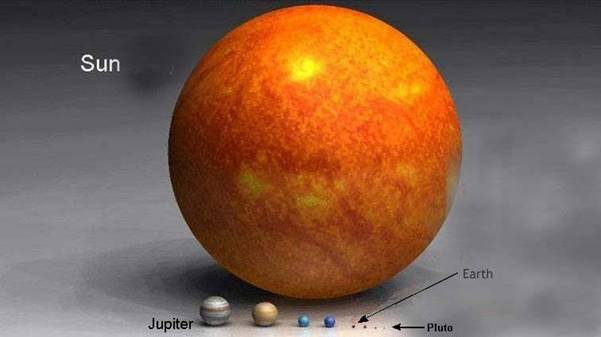
  • The Sun contains 99.8% of all the mass in the solar system. The planets, moons, asteroids, comets—and everything humanity has ever created—share the tiny fraction that remains.
  • Around 1.3 million Earths could fit inside it. The Sun is about 1.4 million kilometres across—roughly 109 Earths placed side by side—while more than 330,000 Earths would be required to equal its mass.
  • Sunlight takes about eight minutes and twenty seconds to reach us. This means that whenever we look at the Sun—through proper eye protection—we are seeing it as it appeared more than eight minutes earlier.
  • The Sun’s core reaches approximately 15 million°C. The pressure and heat there are so extreme that hydrogen nuclei fuse together to form helium, releasing the energy that ultimately becomes sunlight.
  • Every second, the Sun converts around 600 million tonnes of hydrogen into helium. About four million tonnes of matter disappear in the process, transformed directly into energy according to Einstein’s famous equation, E=mc² 
  • The energy warming your face today may have begun its journey around 170,000 years ago. Energy released in the core is repeatedly absorbed and re-emitted as it struggles through the Sun’s dense interior. Once it finally escapes the surface, it needs only another eight minutes or so to reach Earth.
  • The Sun has no solid surface. What we perceive as its surface is the photosphere—a glowing layer of plasma about 400 kilometres thick, with a temperature of roughly 5,500°C. There would be nowhere upon it to stand.
  • Its outer atmosphere is mysteriously hotter than its surface. Although the photosphere is approximately 5,500°C, the corona can reach around two million°C. Why the Sun becomes hotter as one moves farther from its surface remains one of solar science’s great puzzles.
  • The Sun does not rotate as a single solid object. Its equator completes a rotation in about 25 Earth days, while the polar regions take approximately 36 days. Its surface is constantly twisting, flowing and churning.
  • The Sun is carrying us through the Milky Way at astonishing speed. Our entire solar system travels around the centre of the galaxy at roughly 828,000 kilometres per hour—yet one complete galactic orbit still takes about 230 million years.
  • The Sun has an approximately 11-year cycle of activity. The number of sunspots rises and falls as its immense magnetic field changes, with the most active periods producing more solar flares and eruptions.
  • Solar storms can create beauty on Earth. Vast clouds of magnetised particles can be hurled from the Sun at more than 1.6 million kilometres per hour. When they interact with Earth’s magnetic field, they can ignite the magnificent aurora australis and aurora borealis—although powerful storms can also disrupt satellites, communications and electrical grids.
  • In a sense, Earth exists inside the Sun’s atmosphere. The solar wind creates an enormous magnetic bubble called the heliosphere, which stretches beyond the planets. Our entire world—and almost all of the solar system—travels within this vast, invisible extension of the Sun.

Related posts

Related quotes on Wisdom Trove

August 14, 2025

Wondrous photos of galaxies

What an incredible universe we live in! It fills me with such awe.


Related quotes on Wisdom Trove

August 15, 2012

Vast celestial bodies

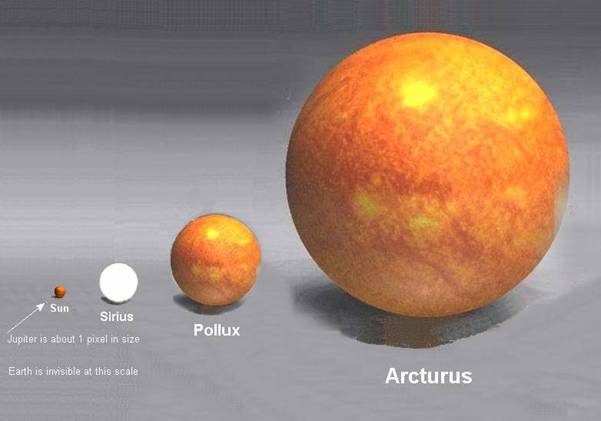
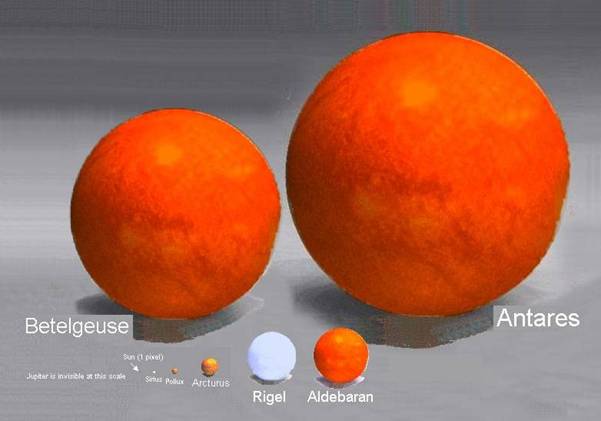
I have often though of the sun as massive. But I've discovered that, in comparison with other stars, it is tiny! This blows my mind.


April 18, 2012

The scale of the universe from tiny to gigantic

As you may know, I'm absolutely fascinated by the vast spaces and objects of the universe and just how tiny we and the earth are in relation to it all.  And I'm also fascinated by the fact we are in reality 99.999% space and made up of infinitesimally tiny atoms.  Imagine my delight when one of my old colleagues from Volvo days sent me a link to a flash site that puts it all into amazing perspective.  Check it out, it really is awe inspiring.


February 19, 2012

The vastness of the universe

I've been reflecting a lot lately about the vastness of the universe.  It's extraordinary, literally beyond comprehension.  It gives me a deep sense of wonder which I find very useful in my spiritual path.  Below I'm going to keep quotes and images on this subject.

  • "Wonder is the basis of worship." -  Thomas Carlyle
  • To give you an idea of how vast the space is between celestial bodies, consider this: Light traveling at a constant speed of 186,000 miles (300,000 kilometers) per second takes just over one second to travel between the earth and the moon; light from the sun takes about eight minutes to reach the earth. Light from our nearest neighbor in space, a star called Proxima Centauri, which is the sun that is closest to our own sun, travels for 4.5 years before it reaches the earth. This is how vast the space is that surrounds us. And then there is the intergalactic space, whose vastness defies all comprehension. Light from the galaxy closest to our own, the Andromeda Galaxy, takes 2.4 million years to reach us.  Eckhart Tolle
  • "The atoms that make up your body were once forged inside stars." - Eckhart Tolle
  • If you watched a rock your entire life it would never look different. But if you were God and could observe the rock over fifteen billion years as though only a second had passed, the rock would be frantic with activity. It would be shrinking and growing and trading matter with its environment. Its molecules would travel the universe and become a partner to amazing things that we could never imagine. Scott Adams, God's Debris
  • Imagine that the earth, 4.6 billion years old, is a 46 year old women. It has taken the whole of the Earth Women's life for the earth to become what it is today. For the oceans to part. For the mountains to rise. She was 11 when the first single cell organisms appeared. She was 40 when the first animals like worms and jellyfish appeared. She was 45 - just 8 months ago - when dinosaurs first roamed the earth. The whole of human civilisation as we know it, began only two hours ago in the Earth Women's life. An awe - inspiring and humbling thought that the whole of contemporary history, the World wars, the man on the moon, science, literature, philosophy, the pursuit of knowledge - is no more than a blink of her eye. Arundhati Roy, The God of Small Things
  • Put three grains of sand inside a vast cathedral, and the cathedral will be more closely packed with sand than space is with stars.  Sir James Jeans

June 26, 2004

A century in the blink of an eye

"Put three grains of sand inside a vast cathedral, and the cathedral will be more closely packed with sand than space is with stars." Sir James Jeans


I love this quote. It gives me a sense of how infinite space is. I've been reflecting quite a bit lately about the infinite nature of time and space and just how fleeting (and very special) our lives are within it.

For fun, I did some calculations (with the help of the web!) to get some perspective on these things and found the results truly fascinating.


Perspective on time  


The earth is 4.5 billion years old. But let's say that the earth began only 1 year ago. This is when other things would have begun:
  • The universe began — 3 years ago
  • Earth formed — 1 year ago
  • First single-celled organisms — 297 days ago
  • First jellyfish — 41 days ago
  • First dinosaurs — 18 days ago
  • Dinosaurs became extinct — 5 days ago
  • Earliest members of genus Homo — 5½ hours ago
  • Civilisation began — 40 seconds ago
  • The wheel was invented — 38 seconds ago
  • Jesus was born — 14 seconds ago
  • The Battle of Hastings — 7 seconds ago
  • The French Revolution — 2 seconds ago


Perspective on space


 In reality, the earth is 93 million miles from the sun. But let's say it was just 1 cm.

This would mean the distance of other things to the sun was:
  • Mercury — 10.39 cm
  • Earth — 11.00 cm
  • Jupiter — 15.20 cm
  • Uranus — 119.20 cm
  • Pluto — 139.5 cm
  • Proxima Centauri — 12.69 km

If you tried to map out our tiny galaxy, you would need a piece of paper 14 times the width of the continental United States, or one and a half times around the Earth.


I find these figures startling and inspiring. Something to reflect on next time I find myself getting too wrapped up in the drama of my tiny life. Next time I fret about something, I'll ask myself "Is this likely to change the evolution of the human race in the next 5 billion years" - and if the answer is no, tell myself to forget it!!
Clicky